Sterling Site Services Civil Engineering · Ltd

In-Situ Concrete & Power-Floated Floors

In-situ concrete contractors

Reinforced slabs, power-floated floors, machine bases and external hardstanding — set out, reinforced, poured and finished by our own crews, as part of the groundworks package rather than a separate trade to co-ordinate.

Constructionline Gold accredited · Trusted by Galliford Try, Costain & BP · Est. 2002
Finished power-floated concrete floor slab inside a commercial unit
20+ Years casting slabs, bases and floors

The Short Answer

What do in-situ concrete contractors do?

An in-situ concrete contractor pours concrete wet into formwork in its final position on site, rather than lifting in factory-made units. That covers reinforced floor slabs, pad foundations and machine bases, retaining structures and external hardstanding — set out, reinforced, poured, finished and cured in place.

We erect pre-cast concrete as well, so a package can be split whichever way the design actually wants it. See the full service list, or Section 278 and Section 38 highway works for concrete inside a highway scheme.

What We Pour

In-situ concrete, self-delivered

The same crews that dig the formation, lay the drainage and prepare the sub-base cast the concrete on top of it — so there is no interface to manage between the groundworker and a separate concrete subcontractor.

Slabs and floors

Ground-bearing and reinforced slabs, inside and out.

  • Reinforced ground-bearing floor slabs, mesh or loose bar
  • Power-floated and power-trowelled internal floors
  • Tamped and brushed finishes where specified
  • Damp-proof membranes, insulation and fabric supports
  • Sawn, formed and armoured joints to the agreed layout
  • External hardstanding, yard slabs and service yards
  • Loading bays, ramps and plinths

Structures and bases

Everything the frame and the plant land on.

  • Pad foundations, strip footings and pile caps
  • Machine bases with holding-down bolts cast to template
  • Settings prepared ready for incoming steelwork
  • Reinforced walls, upstands and retaining structures
  • Bridge deck and parapet concrete within highway schemes
  • Chambers, headwalls and drainage surrounds
  • Formwork, reinforcement fixing and curing

Specifying It

Which concrete floor finish do you need?

The finish decides the programme as much as the slab thickness does. This is the short version of the conversation we have with estimators before a pour is priced.

FinishHow it is achievedTypically used for
TampedTamping beam drawn across the wet surfaceExternal slabs and hardstanding needing grip
BrushedStiff brush drawn over a floated surfaceRamps, yards and vehicle routes
FloatedSkip float or bull float onlySlabs taking a screed or thick build-up on top
Power floatedRide-on or walk-behind float, pans then bladesWarehouse and industrial floors taking a coating
Power trowelledRepeated trowel passes closing the surfaceAbrasion-resistant floors under racking and forklifts

Whatever the finish, the joint layout and the surface regularity class need to be fixed before the first pour. Changing either afterwards means cutting into a slab that has already cured.

Recent Work

Lincoln — drainage, bases and power-floated floors

A commercial development in Lincolnshire taken from deep drainage and excavation through to reinforced slabs, power-floated internal floors and external hardstanding — one package, one programme.

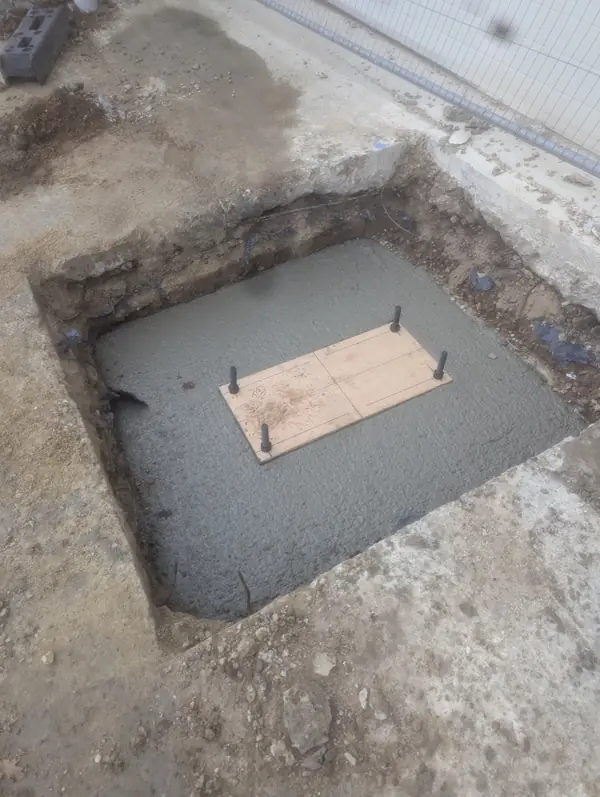
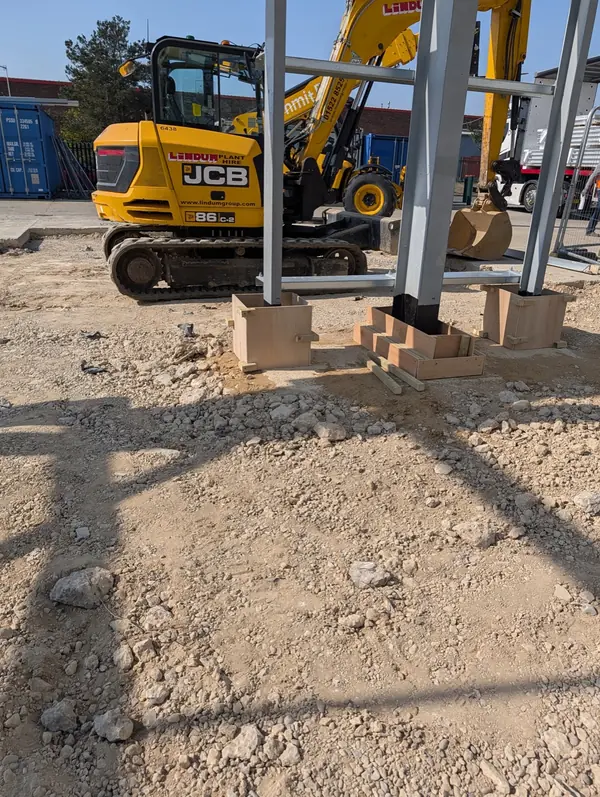
Foundation bases set out ready for incoming steelwork
In-situ concrete base cast with holding-down bolts
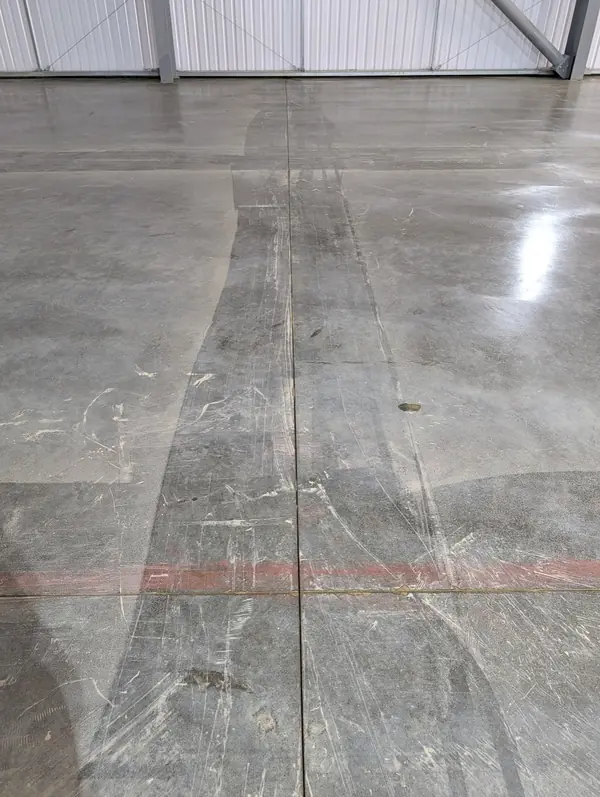
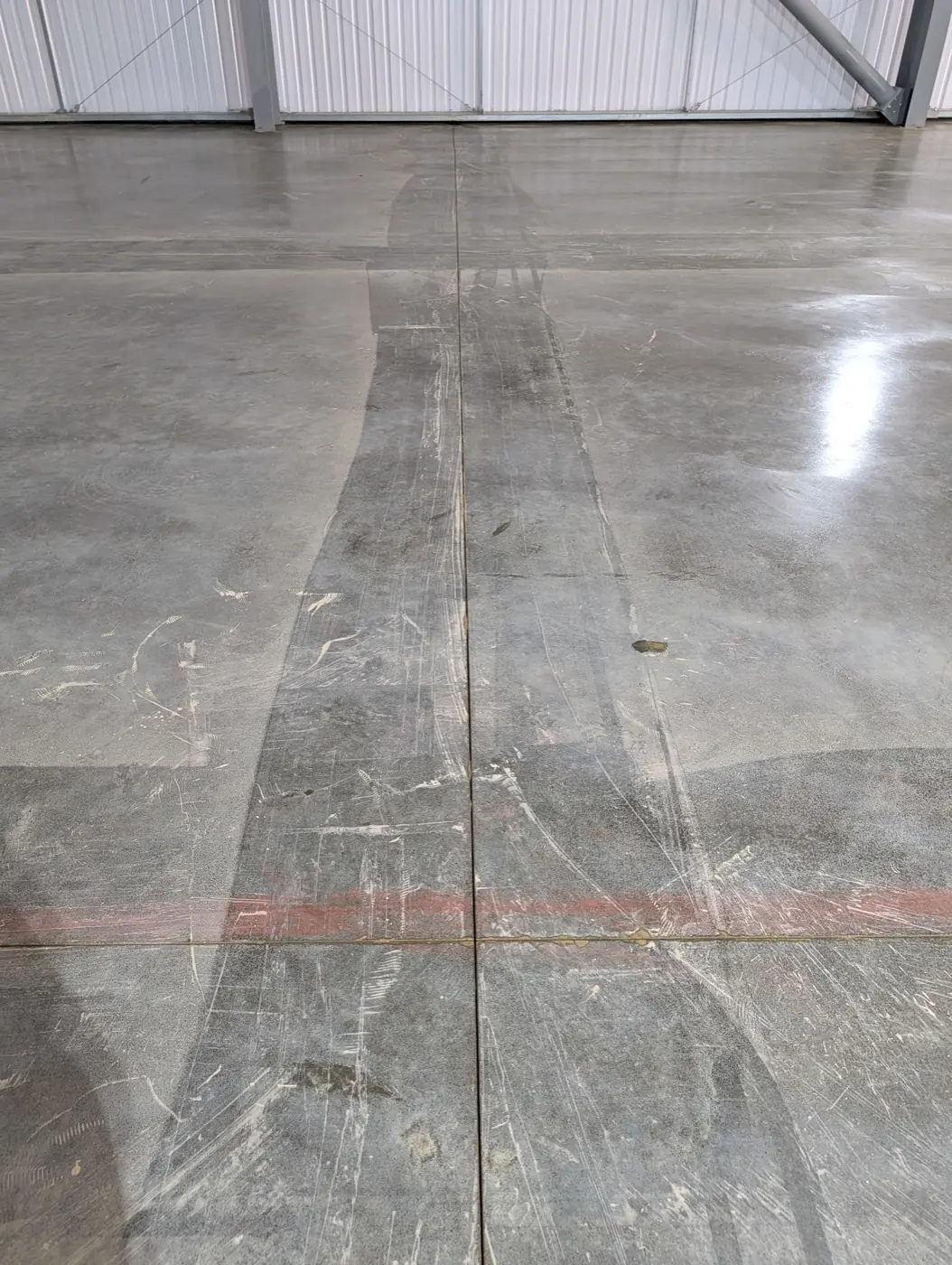
Power-floated concrete floor, finished internal slab
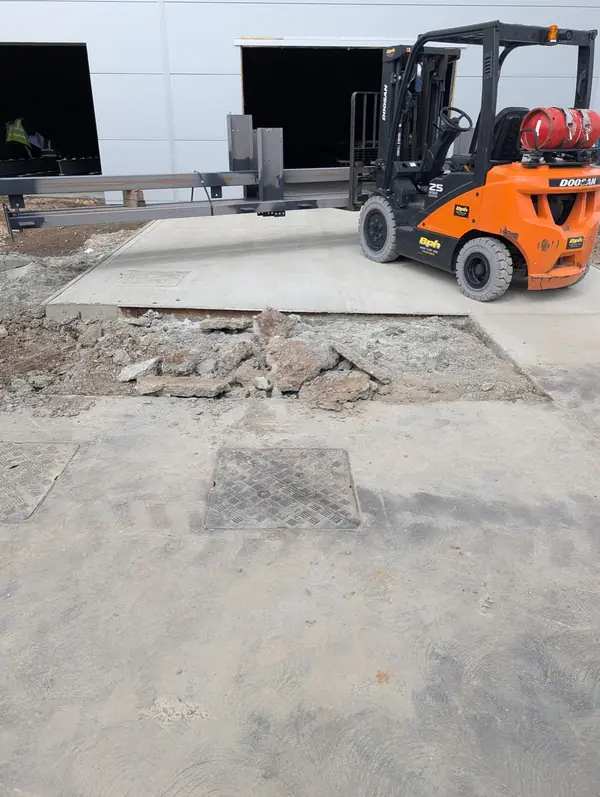
External concrete hardstanding, finished yard slab

See the full Lincoln and Manchester galleries.

Common Questions

In-situ concrete — the questions estimators ask us

What is the difference between in-situ and pre-cast concrete?

In-situ concrete is poured wet into formwork in its final position on site and cures there. Pre-cast concrete is manufactured in a factory and lifted into place. In-situ suits slabs, bases and anything that has to fit an existing level or an irregular shape; pre-cast suits repeated units where the lifting plan and the factory tolerance are the advantage.

What does a power-floated floor actually give you?

A dense, closed, hard-wearing surface that takes a coating or line marking directly, with no screed on top. The float closes the surface and the trowel passes burnish it, so the floor resists abrasion from forklifts and racking legs far better than a tamped or brushed finish.

What floor flatness can you achieve?

We work to the surface regularity class named in the specification and set the pour, the screed rails and the joint layout around it. The class has to be agreed before the pour rather than after: it dictates the bay sizes, the joint positions and how much slab can be poured in one visit.

Can you cast bases for incoming steelwork?

Yes, and it is a large part of what we do. We set out and cast pad foundations, pile caps and machine bases with holding-down bolts cast in to the fabricator's template, so the frame goes up on the dates the programme says rather than waiting on remedial grouting.

Do you supply the reinforcement and the formwork?

Yes. Mesh, loose bar, fabric supports, formwork and the joint system are all part of our package, and the same crews that excavate and prepare the sub-base cast the slab. One contractor carries the formation level, the reinforcement cover and the finish.

What do you need to price an in-situ concrete package?

The slab drawings with levels, the reinforcement details, the concrete specification and the surface regularity class. If there is a joint layout or a floor-loading schedule, send that too — the joints and the loading usually decide the programme more than the volume of concrete does.
Have a concrete package to price?

Send us the slab drawings, the reinforcement details and the specification — we will come back with a competitive, deliverable price.

Request a Quote →